
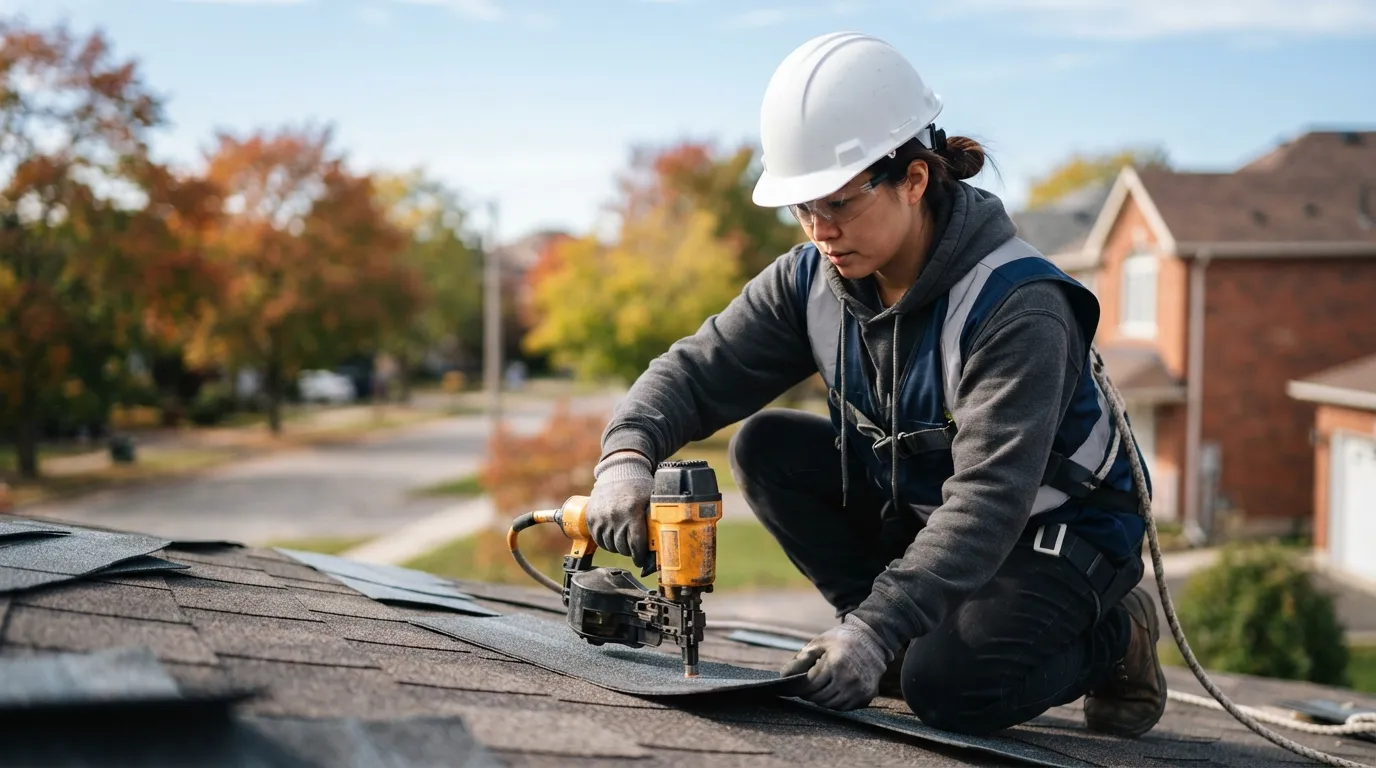
Storm & hail damage repair for Toronto roofs
Comprehensive inspections and repairs across Toronto — email us for an assessment and insurance documentation.
Email Us for a Free EstimateStorm & hail damage repair in Toronto
Toronto’s mix of late-spring storms, lake-effect squalls, and seasonal freeze–thaw cycles makes roofs and siding vulnerable to wind lift and hail impact. Hail damage can be subtle — bruising to shingles, denting of metal flashings and vents, and granule displacement often aren't clear from the street. 123 Roofing inspects vulnerable components, documents findings for insurers, and proposes repair or replacement options anchored in building-science principles. Acting before water infiltration or progressive deterioration reduces repair scope and cost.
What this service covers
We inspect and repair wind-lifted shingles, hail bruising to asphalt and polymer-modified shingles, dented metal flashings, vents and gutters, and localized membrane damage on low-slope sections. The scope includes removal and replacement of compromised shingles, re-securing lifted edges with appropriate fasteners and underlayment repairs, replacement or straightening of aluminium eavestrough and downspouts, and resealing roof penetrations. 123 Roofing documents all findings with photographs and a written scope to support insurance claims.
Signs you need repair now vs what can wait
Immediate attention is needed when you find shingles with exposed mat, loose or missing shingles after wind events, granule loss that reveals black spots, or active leaks inside the attic or ceiling. Cosmetic scuffs on siding or isolated denting to vents may be monitored short-term if water ingress is not present, but in Toronto’s freeze–thaw climate even small breaches can expand over months. Hail damage is often not visible from the ground, so an inspection from a safe, anchored vantage is the right move rather than guessing.
Why acting early saves money
Hail bruises compromise the shingle’s granule layer and can break the asphalt matrix, which accelerates ultraviolet and moisture-driven deterioration and increases the chance of membrane failure. Wind-lifted shingles allow wind-driven water to reach the underlayment and roof deck, creating rot, mould, and structural repair needs that are costlier than replacing a section of shingles. Early documentation also preserves insurance options — there are claim-filing time limits and evidence is best collected before repairs alter the scene.
Why Toronto conditions matter
Toronto’s proximity to Lake Ontario increases variability in storm tracks, producing both large hail and strong gusts that cause different failure modes: hail micro-fracturing versus seam blow-offs from uplift. Older homes in central neighbourhoods and newer suburban builds in York and Etobicoke use a mix of steep-slope asphalt shingles, architectural laminates, and metal flashing details that react differently to impact. 123 Roofing tailors inspection protocols to these materials and the way local building assembly details fail under storm loads.
Request a no-obligation roof assessment by email
Email Us for a Free Estimate
Storm & hail damage repair in Toronto
Toronto’s mix of seasonal storms—spring hail cells, summer thunderstorms, and lake-effect wind events—puts roofs under repeated stress. 123 Roofing inspects asphalt shingles, metal flashings, soffits, fascia, eavestroughs, and roofing underlayments for impact damage, wind lift, and hidden bruising. We treat residential and small multi-unit properties differently from commercial flat-roof systems because materials and failure modes differ. Proper documentation for insurers and a methodical repair scope are part of every visit across Toronto, its county, and nearby Mississauga and Brampton.
What this service covers
We inspect and repair wind-lifted asphalt shingles, composite shingle fractures, hail bruise points on shingle granules, dented metal flashings, and punctures in membrane systems. Remedial work includes targeted shingle replacement, underlayment repair, flashing reseating or replacement, and eavestrough realignment. For flat roofs we evaluate modified bitumen and single-ply membranes for impact punctures and seam failures. Every repair includes photographic documentation suitable for an insurance claim.
Signs you need repair now vs what can wait
Active leaks, missing shingles, or obvious flashing blowouts require immediate attention to prevent water entry and secondary damage to sheathing and insulation. Cosmetic granule loss on slopes that are not leaking can be monitored short-term, but hail bruising often accelerates shingle failure and should not be ignored. Wind-lifted shingles that have lost their seal can flap free in subsequent storms—replace rather than patch where the factory seal is compromised. Timely intervention reduces the risk of rot, mould, and structural repair costs.
Why acting early saves money
Left unaddressed, broken or lifted shingles allow moisture to reach roof deck, leading to sheathing delamination and rafters or truss decay; those are materials- and labour-intensive to replace. Repairing shingles and flashing is a smaller scope than deck replacement or interior drywall and insulation remediation. Early claims preserve roof life and often yield simpler, more cost-effective insurance settlements because the cause-and-effect chain is clearer in documentation. 123 Roofing’s standard inspection protocol flags developing failures before they cascade.
Why local conditions matter
Toronto’s freeze–thaw cycles and wind patterns off Lake Ontario accelerate deterioration in marginal repairs and expose improper installs. Shingle granule shedding from hail and ultraviolet breakdown occurs faster on south-facing slopes in the city’s higher-sun neighbourhoods. Roofing details in older Toronto housing—narrow eaves, multi-plane hips and valleys, or decorative dormers—change access methods and fastening patterns. 123 Roofing’s crews are familiar with local stock and common install issues in Toronto, Mississauga and Brampton neighbourhoods.
Why Choose 123 Roofing for Storm & hail damage repair
We approach storm and hail damage repair as a structural and safety problem, not a cosmetic one. Our focus is methodical inspection, clear written scopes, and repairs that restore intended weather resistance.
Transparent written quotes
Every repair begins with a detailed written scope describing materials, fastening patterns, and expected life cycle. You receive the documentation needed for insurers and local permit officers.
No hidden fees
Estimates list material allowances and labour line items so the final invoice matches the written quote unless unforeseen structural damage is discovered. If the scope changes, we document and explain the cause before proceeding.
Cleanup and site protection
We protect landscaping and walkways with drop sheets, roof-edge guards, and magnetic sweep for nails on asphalt shingle jobs. Post-job cleanup is photographed and verified against pre-job notes.
Local Toronto crews
Our teams work across Toronto neighbourhoods and nearby Mississauga and Brampton, so we know local weather impacts and building-stock details. That familiarity shortens inspections and improves accuracy in scope-writing.
Workmanship guarantee
Repairs are completed to meet standard roofing fastening patterns and sealing practices for the materials used, and we stand behind our workmanship with a clear remedy policy. We document completion with elevation and detail photos for peace of mind.
Clear email-first communication
123 Roofing handles inquiries and follow-up by email so every request, quote, and photo record is archived and easily shared with insurers. Email-first exchanges also allow us to attach annotated photos and repair details for Toronto homeowners.
Signs You Need Storm & hail damage repair in Toronto
Storm damage can present as obvious failures or subtle defects that lead to larger problems. These are the symptoms we evaluate during an inspection and what each likely means under the surface.
Missing or torn shingles
Visible gaps or shingles fluttering at the edges indicate wind lift and lost fastener integrity. Underneath, nail failures or split decking may be present where repeated flap cycles have weakened joints.
Granule loss and bald spots
Large areas where granules have been stripped suggest hail impacts or accelerated ultraviolet wear. Beneath the granule loss the asphalt mat is exposed and will oxidize faster, leading to brittleness and cracking.
Dented metal flashings and vents
Hail can deform metal flashings, counterflashing, and vent caps, breaking seals and creating drainage paths. Dented flashings often mean compromised seals at step-flashings or chimney interfaces that will leak in driving rain.
Pockmarks or bruises on shingle surfaces
Hail bruises may be subtle depressions without granule loss but represent fractures in the shingle’s asphalt coating. Those bruises often lead to cracks once temperatures drop and the material stiffens in Toronto’s seasonal range.
New or recurrent interior stains
Fresh ceiling discoloration after a storm points to active water entry through damaged roofing components. The stain’s location helps trace which valley, hip, or flashing assembly is at fault and whether underlayment has been breached.
Sagging roof deck
Localized sag indicates moisture accumulation and rot in sheathing or joists, often the result of prolonged leaks after initial storm damage. Structural repair is usually required along with roof replacement in the affected area.
Gutter dents and alignment issues
Eavestroughs dented by hail or pulled away by wind mean roof edges and fascia fasteners have absorbed impact energy. Misaligned gutters can feed water against the wall cladding and fascia ends, accelerating rot.
Common customer questions about Storm & hail damage repair
How much does Storm & hail damage repair cost in Toronto?
Cost depends on the property’s roof area, the extent of visible and concealed damage, and the materials selected for repair or replacement. Access and roof complexity—multiple hips, valleys, dormers—add labour. If inspection uncovers deck or insulation damage, scope and cost increase. We provide a written quote after a methodical inspection so you understand line-item drivers.
How long will repairs take after inspection?
Timeline varies with scope: small targeted shingle or flashing repairs often complete in a day, while partial replacements or deck remediation take multiple days. Complex multi-plane roofs or jobs requiring permit coordination can extend schedules. We outline the expected schedule in the written scope so you can plan.
What materials and options are common for repairs?
Repairs use compatible materials: architectural or three-tab asphalt shingles, synthetic underlayment, ice-and-water shield in critical areas, metal step flashings, and elastomeric sealants for vents. For flat roofs we use seam-repaired single-ply or torch-applied modified bitumen where appropriate. We explain trade-offs in lifespan and cost in your quote.
Are permits or inspections required for storm repairs in Toronto?
Minor repairs usually don’t require permits, but roof replacements or structural deck work may. Toronto’s municipal code includes permit triggers for structural changes and re-roofing beyond a certain area. We note permit needs in the scope and can coordinate with local inspectors when required.
What warranties or guarantees apply?
We distinguish manufacturer product warranties from our workmanship guarantee; product warranties cover material defects, while our workmanship policy covers installation errors for the period specified in the quote. Warranty transfers and claim processes are explained in writing before work begins. We also document completion for any future warranty claims.
How should I prepare my home for the work?
Clear vehicles and items away from eaves and driveway to allow material staging and waste container placement. Inside, remove fragile items from ceilings adjacent to the work zone and secure pets. We include a prep checklist in the email estimate so you and your insurer have the same expectations.
Why do quotes differ between contractors?
Contractors estimate different risks: some price conservatively for unseen deck damage or non-standard access, others assume minimal hidden issues. Material quality, described fastening patterns, and whether documentation for insurance claims is included also vary. 123 Roofing’s quotes emphasize documented scope and conservative risk allowances so insurers and homeowners have clarity.
Weather is hard on your roof — email us for a same-day inspection.
Summer roofing conditions in Toronto, ON
Summer heat and thunderstorms around Toronto, ON put roofs through intense UV, expansion, and sudden wind and hail. Heat accelerates shingle aging, so summer is prime time for inspections and repairs.
Proudly Serving Toronto, ON
Local, on-time service throughout Toronto and the surrounding area.